
|
In January 2010, 5DME visited the CFS bases at Brukunga and Woodside in the Adelaide Hills. We had a chance to talk to the personnel, including the pilots of the Erickson Air Crane. Everyone was most helpful and provided plenty of useful information for the 5DME pages.
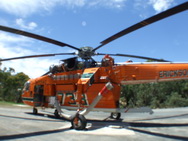
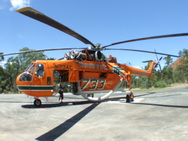
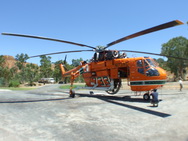
Erickson Air Crane at Brukunga.

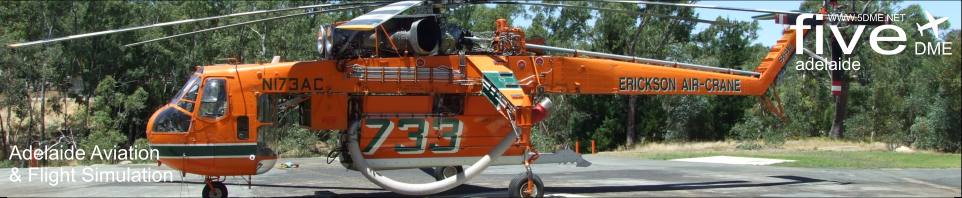
Christine (733) on the helipad, Brukunga
This huge machine is amazing when you first see it close up. Coming around the corner to the helipad reveals this nemesis for the first time. It's a bit of a shock as it is much bigger than it appears on our local news media/TV. Immediately jumping out the car with cameras in hand, the 5DME crew were assisted by the pilots to get some great shots for our gallery.
Just talking to the pilots was of great interest in itself. Information and stories about the helicopter and the job overall were most interesting. From pre-flight checks, deployment, fill methods and bombing fires the pilots were a great source of information. The flight time of most of the Air Crane pilots exceeds 14.500 hours and the experience not only individually but between them all must be enormous.
Keith and Bill (pilots) explained how they prepare for quick deployment by performing checks in the mornings around their pre-flight examinations. This allows and abbreviated check should the aircraft be called to a fire. From the time of call-out to being airborne is 15 minutes.
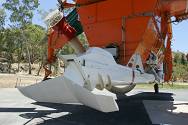
Keith and Bill also informed us that modifications have been made over the years to streamline operations and enhance the helicopter. For instance the Sea Snorkel that is used to fill the tank with sea water, was added to reduce corrosion damage to the helicopter by sea spray. When hovering over the ocean, filling the tank with the Pond Snorkel, sea spray may be ingested into the turbines and can also cause excessive corrosion to the airframe and components. This has been reduced by the spray trailing behind the helicopter with the Sea Snorkel, as filling is performed whilst in forward motion at approximately 50kph.
Aircraft Specification
| Length |
21.41M Fuselage |
| Height |
5.67M |
| MTOW (Maximum Take Off Weight) |
19 Tonnes |
| Water/Retardant Capacity |
10,000L (reduced to 7,500L for heat / altitude) |
| Engines |
2 x Pratt & Whitney JFTD12-4A Turboshaft Engines. 4,500 SHP each. |
| Fuel Type |
JET-A1 (Kerosene) |
| Fuel Consumption |
2,080L per hour when bombing. |
| Rotor Blades/Diameter |
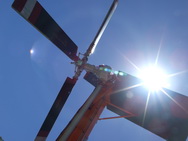
6 Blades / 21.95M |
| Rotor Disc Area |
378.1M2 |
| Fill Methods |
Sea Snorkel (aircraft in motion) and Pond Snorkel (aircraft stationary). Listen to interview for details. |
| Fill Times |
40secs to 60secs depending on water conditions & fill method. |
| Delivery Volumes |
From 250L (multi drop) to 7,500L (one drop)
|
| Delivery Speed |
0 knots upwards. 50 knots typical. |
| Transit Speed (To<>From Water to Fire) |
Approx. 100knots |
| Crew |
2 (pilot, co-pilot), Room for one rear-facing observer. |
|
Air Crane Roles
The Air Crane is best used as a first attack asset although it can perform many roles in the fire fighting process. This can include but is not limited to Property Protection and assisting ground crews during a fire. As a first attack asset the Air Crane can be dispatched to a fire in the early stages. This means the fire could be extinguished without the need for further resources.
Deployable Asset
When required in other states to support fire fighting efforts the helicopter and crew are readily deployable and versatile. Christine (The SA based Air Crane) was dispatched to the Victorian bushfires in early 2009. The pilots are familiar with the various states as they have all worked at various times in those areas.
Locally, there is a fuel tanker that can be deployed with the helicopter to various locations. There is also a team of technical personnel and several containers of equipment.
More Information
Rather than provide extensive documentation here, it would be better for you to hear the information from the pilots. The following 14 minute interview covers many interesting points. The interview is by Nigel Daw from 5DME talking to Air Crane Pilots Keith Gill and Bill Neckels at Brukunga CFS Base on the 8th January 2010.
|
|
 |
| |
Above photo shows the scale of this machine against one of our photographers.
|
Interview
Nigel Daw (5DME) talks to Keith Gill and Bill Neckels (Air Crane Pilots)
Click to listen
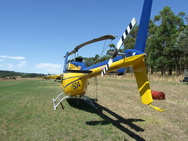
Woodside - Air Tractors, Helicopters and Fire Spotters.
Our visit to Woodside revealed several Air Tractors and a few helicopters. After a stroll down the flight line we ended up at the pilot's standby area and had a chance to talk to Sam McCabe of AMR.

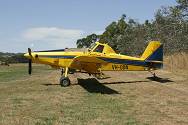
Air Tractors
Source: Sam McCabe
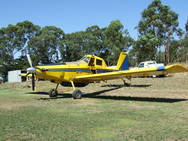
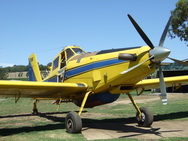
Air Tractors are a small turbo prop powered aircraft capable of carrying 2,450L to 3,200L of water or retardant depending on the model. They are fast, nimble and able to depart the base in almost all weather conditions. Sam informed us they have never, not been able to take off.
- Cruise: 160 knots.
- Dispatch: 3 Mins to wheels off.
- Area: Anywhere in Mount Lofty Ranges in 10 minutes. Longer for more distant locations.
- 5 hours fuel.
- Drop Capactity: 2,450L (AT-602) or 3,200L (AT-802)
- Reload 2 minutes, Water/Retardant/Gel.
Effectiveness
An example of Air Tractor effectiveness was a recent small fire in Hahndorf. The Air Tractors were dispatched immediately and had the fire out within minutes. No further resources were required to fight the fire. Other than observation and mopping up, ground crews were left free to attend other incedents if required. Also, being the fire was extinguished quickly, damage was reduced to a minimum.
Response Times / Reload capabilities
To keep response times to a minimum there are several designated refueling/refilling airstrips.
- Mt Crawford
- Cherry Gardens
- Goolwa
- Murray Bridge
- Mt Compass
- Gawler
- Virginia
- Parafield
- Second Valley
- Up to 200 airstrips state-wide
Coordination
Fixed wing aircraft are controlled via the CFS from the State Air Desk in Adelaide. They are most effective for initial attack and ground Fire Fighter support. The CFS fleet can be airborne in as little as 3 minutes and is very flexible as to job taskings and environments.
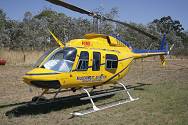
There are several "Spotter" aircraft, namely Cessnas and Helicopters used in conjunction with Fire Bombers and Ground Crews to help coordinate fire fighting strategies. Fire Fighting aircraft can help to contain fires early and assist ground crews in their efforts by providing aerial support.
SA Fixed Wing Fleet
- 6 x AT-802 Air Tractors
- 2 x AT-602 Air Tractors
- 1 x Cessna 337
- 2 x Cessna 182 (One in South East & one at Port Lincoln)
Bombing Runs
The fixed wing aircraft are good for bombing the head of the fire as helicopters (with the exception of the Air Crane) may experience a lot of turbulence. In the case of heavy turbulence the smaller helicopters attack the flanks. Height is important as it is desirable for the retardant not to fall straight down. Speed is slowed to approximately 100 knots for the drop. When getting to the head of the fire visibility is the main problem.
Drops can be conducted from as low as 50FT. Conditions dictate altitude. Retardant can be dropped from higher altitudes due to its mud-like consistency. Visibility also plays a role in how the fire is appraoched.
How is CFS Aerial Fire Fighting coordinated with Air Traffic Control?
We posed this question to David Smith from Airservices Australia (Adelaide) as 5DME were interested in how the services work together when fire fighting aircraft need to transit controlled airspace...
As far as Adelaide ATC goes, we do have some special procedures to facilitate the firefighting operations. Airservices
has Letters of Agreement with the operators involved in which each of the aircraft is allocated a semi-permanent transponder code. As the LoAs are reviewed annually before
the fire season, the operators usually advise us which aircraft are going to be based where, and we then allocate codes from a special series of numbers that cannot be allocated by our Flight Data Processor to any other flight
plan. Callsigns depend on task, as described in the main article and include Bomber (BMBR), Helitack (HLTK), Firebird (FBIR) and Bird-dog (BDOG), to which is added a 3 digit number starting with 5 to denote SA operations.
Being
based at Woodside or Brukunga, the aircraft can get airborne up to A025 without entering controlled airspace, and this enables them to move over a lot of the hills area without needing to talk to us or obtain a clearance.
Our radar at Summertown picks them up on their unique codes as soon as they are airborne, so we know almost instantly that there's an operation about to happen somewhere and just wait to see what direction they head off in.
Sometimes they are off to a fire, and sometimes they may be just repositioning to another area of the state where there are fires burning, or where the danger is higher than it is locally.
We are also aware of the usual
fire hot spots in the hills face zone which are likely sites - Ansteys Hill, Black Hill, Onkaparinga Gorge etc - and can anticipate a call for clearance accordingly. Despite their workload, the pilots work really well with
us, have excellent airspace awareness, and give as much notice as possible for clearances when required. On spotting one of the allocated codes, we can either put a radar tag (RADTAG) onto it for instant identification, or
we have the option if time permits, of calling up what we call Stereo Flight Plans and activating them. The stereo plans are aircraft specific, are held permanently in our Flight Data Processor and are amended as required
when new LoAs are signed. They provide a template, and have basic details in them, so for example we'll know BMBR582 is an AT8T aircraft type, registration VH-ODZ etc, departing from and arriving at Woodside and operating
at about A030. When the pilot notifies the actual location of the fire, we can often have a TAAATS flight plan already activated and a label on the aircraft; all that remains to be done is let our system know via a couple
of mouse clicks where exactly the aircraft is going and at what level.
It certainly gets quite busy when one, then two, then three or more tracks appear near Woodside at the same time, and other firefighting aircraft
may be at Parafield wanting to get to the same location. We then get Parafield Tower coordinating more flight details with us, and maybe a couple more Bombers call up out of Maitland, say, also tasked to an Adelaide Hills
fire. And of course, then the media helicopters all want to get into the mix as well, and probably the Police chopper too. With the aircraft operating at low level, they do pop in and out of radar coverage quite frequently,
so it creates quite a workload keeping up with which aircraft are still on scene and which have gone back to base to reload. If the operations are in controlled airspace we also have to issue traffic to everyone about everyone
else as far as is practicable.
And all the while, the usual traffic continues.
There's a lot of talking involved, not only on the air but just coordinating between the different control positions in the room.
We try not to talk any more than absolutely necessary to the firefighting crews as of course they are working other radio channels with fire control and each other, let alone the difficulty of low level flying, targeting the
fire, putting up with turbulence and smoke etc. The easiest thing to do is just let them get on with it and keep our other traffic well clear.
Fortunately, if the fire is near to Adelaide it is often only just inside
the 11 miles of the control zone and most of our other operations overfly the activity. If that is not the case, then we simply have to divert aircraft away from their normal flight paths to give priority to the fire fighting
ops. We're allowed to ignore noise abatement flight paths for jets in those circumstances since life and property is at risk on the ground, so occasionally folks may notice jets in a part of the sky where they usually aren't.
All part of the interesting mix of summer traffic we handle here.
Photos from Brukunga and Woodside
See the 5DME Photo Gallery for images of the aircraft mentioned in this article.
Interesting Links
http://www.cfs.sa.gov.au/
http://www.fire-brigade.asn.au/operations/aircraft.asp#602
http://www.ericksonaircrane.com/
http://www.helicorp.com.au/
Credits
SA Country Fire Service (CFS Media)
Brukunga, Air Crane Pilots: Keith Gill & Bill Neckels
Woodside Contact: Sam McCabe
Airservices Australia: David Smith
Story & Audio Post Production: David H.
Photos: David H & David Wilkie.
Interview conducted by Nigel Daw.
Back to STORIES index page
|